O conteúdo do nosso site é traduzido para o português com uso de inteligência artificial e, sempre que possível, revisado por humanos. Encontrou um erro? Entre em contato conosco.
Paulo Shinji Yoshimoto, Coordinator of the Indigenous School Education Support Project
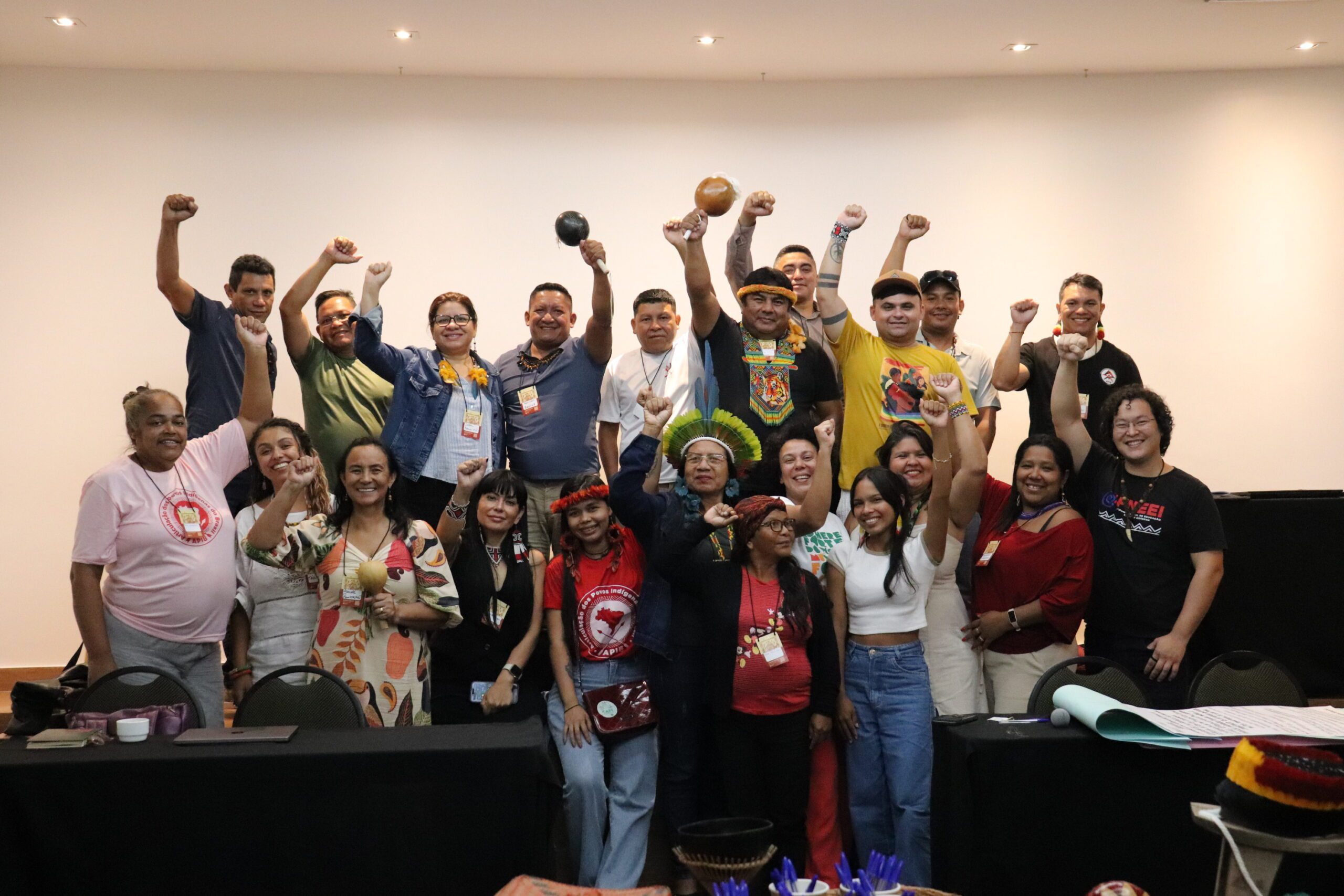
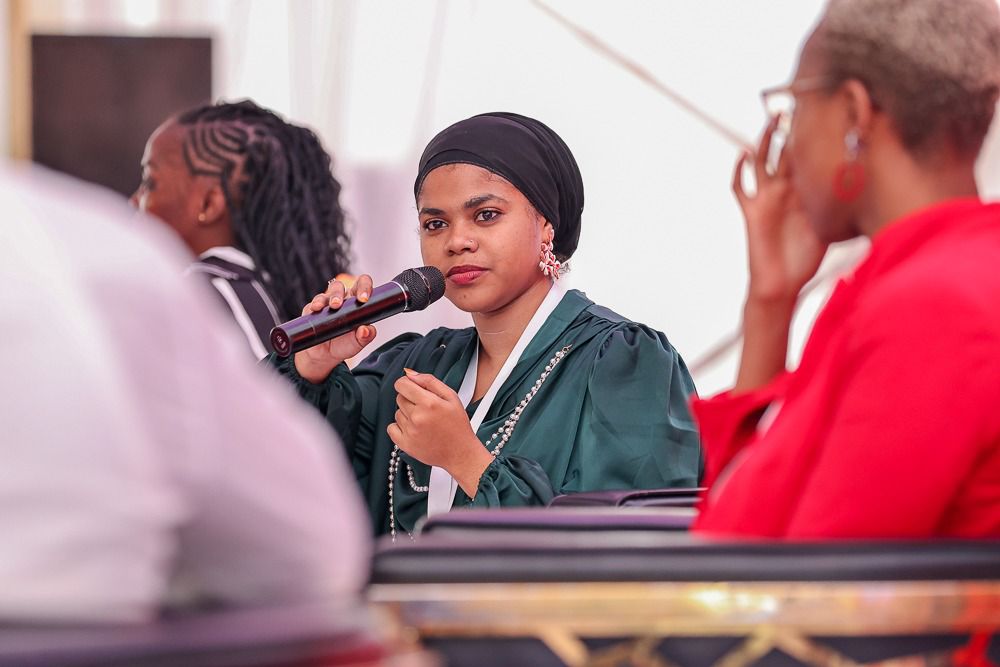
Indigenous organizations came together at a convening supported by Imaginable Futures, April 2026. Credit: Oziel Ticuna.
This blog post has been translated from the original in Portuguese.
“Education is a right, but it must happen in our own way” is a phrase born out of the long struggle led by the National Forum on Indigenous School Education (FNEEI) and expresses the demand for schools that respect and sustain Indigenous ways of life. Valuing these forms of knowledge is not only a matter of addressing historical injustices, but also an opportunity to expand society’s understanding of how to respond to crises that affect all of us.
This sentiment has been a learning that has continued to develop over the past four years since Imaginable Futures has been supporting Indigenous school education, a field that has historically received little attention from private social investment. In the hope of strengthening this ecosystem and encouraging broader forms of support for the field, we are sharing some of these still-emerging lessons.
Before European colonization, millions of Indigenous people lived across the territory now known as Brazil, with their own social, cultural, political, and educational systems. Throughout centuries of colonization, schools were often used as tools of assimilation that imposed European languages, values, and knowledge while delegitimizing Indigenous ways of knowing.
Brazil’s 1988 Constitution marked an important turning point by recognizing Indigenous peoples’ right to a specific and differentiated form of school education. Indigenous school education then became guided by Indigenous principles such as autonomy, self-determination, plurality, and the valuing of Indigenous knowledge, taking on a community-based, intercultural, and multilingual character.
Despite these advances and despite the law, many of these rights still remain today far from reality. Only 16% of Indigenous primary schools offer the option to continue onto a secondary school, forcing students and families to leave their territories in order to continue studying. Infrastructure challenges persist, alongside a lack of adequate transportation, shortages of teaching materials produced in Indigenous languages, precarious working conditions for teachers, and recurring episodes of racism and violence.
Communities, organizations, and the Indigenous movement have been building powerful responses to these challenges. In addition to advocating for the creation and implementation of public policies, they are developing their own solutions rooted in Indigenous territories and in Indigenous ways of producing knowledge, teaching, and living collectively.
However, organizations working with Indigenous school education remain deeply underfunded. A study conducted by the Plurinational Institute of Indigenous Researchers (INPPEI), Imaginable Futures, and FNEEI found that nine out of ten organizations face difficulties accessing funding, while seven out of ten operate with annual budgets below R$50,000 (USD $9,900). This is particularly striking in a country where education receives more than one-third of all private social investment, as we recently highlighted in an op-ed published in Nexo.
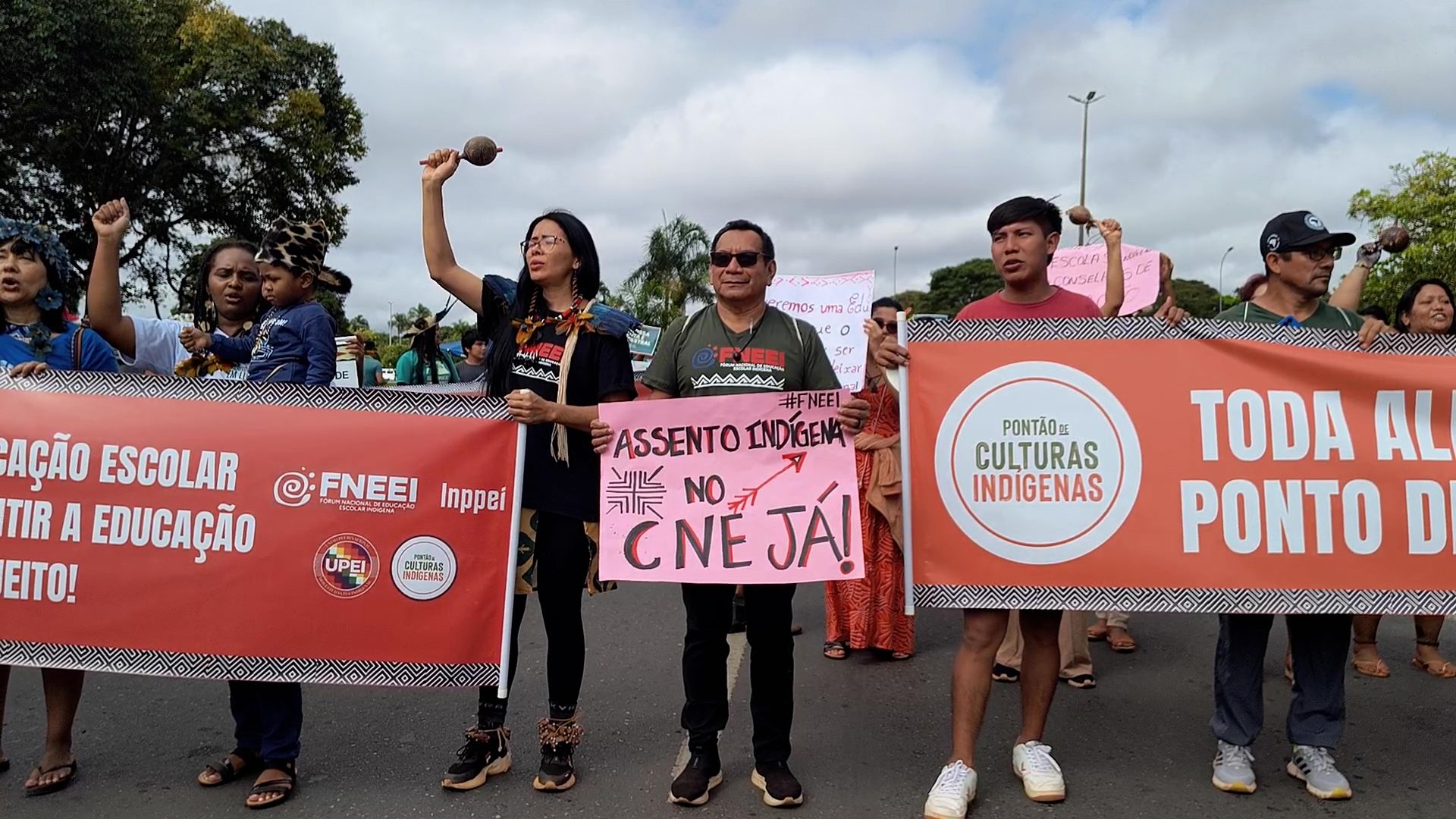
The National Forum on Indigenous School Education (FNEE) advocating for changes in Indigenous education, 2025.
Funding and Beyond: Lessons in Education, Participation, and Trust
It was within this context that Imaginable Futures began providing institutional support to FNEEI in 2022. Since then, we have supported calls for proposals led by partners such as Fundo Casa, Fundo Podáali, and Instituto Unibanco, while also directly supporting regional Indigenous organizations so they could strengthen and grow their education work. Important results from this collective strengthening process are already visible. FNEEI played a direct role in the advocacy efforts that contributed to the approval of the National Policy on Indigenous School Education in Ethno-Educational Territories (PNEEI-TEE), launched in 2025, as well as in advancing the proposal for a Federal Indigenous University. Supported organizations have also led conversations for communities about issues within their territories, created regional coordination spaces, and strengthened dialogue with state and municipal education departments.
More than these concrete outcomes, however, this journey has transformed our understanding of education, philanthropy, and participation.
One of the most important lessons has been recognizing that supporting Indigenous school education means operating at the intersection of education, culture, territory, democracy, and the environment. In many contexts, the lack of adequate schools forces young people to leave their communities in order to study. This weakens territorial ties which reduces the communities’ capacity to protect their territories to pressures such as mining, deforestation, and land invasions. Therefore, strengthening Indigenous school education means strengthening the communities’ ability to remain on their lands and sustain ways of life that have historically contributed to environmental preservation.
We believe that recognizing Indigenous school education not as a niche issue, but as a strategic field for our collective future, can broaden the possibilities for private social investment itself.
We have also learned that participatory processes move at their own pace. In many of the initiatives we supported, proposals were developed through broad consultation processes involving women, youth, children, elders, and community leaders. These approaches often challenge the accelerated expectations of time within traditional philanthropy, but we found they generate deeper impact, stronger collective legitimacy, and greater connection to local realities.
Another important lesson is that the Indigenous movement has its own systems of governance, planning, and legitimacy-building. For many organizations, it may be more strategic to invest in forms of strengthening that go beyond a model focused exclusively on fundraising and institutionalization, prioritizing collective processes rooted in territories. This requires funders to build relationships grounded in trust, flexibility, and mutual learning.
Along our own journey, we have come to better understand how different worldviews can expand the conversation about education itself. Indigenous school education often brings together learning, community life, spirituality, territory, and care for nature as inseparable dimensions. Rather than viewing education solely as preparation for the labor market, many Indigenous experiences invite us to think about human development in relation to collective wellbeing, environmental balance, and cultural continuity.
This process is still unfolding, and we know we still have much to learn. But we believe that recognizing Indigenous school education not as a niche issue, but as a strategic field for our collective future, can broaden the possibilities for private social investment itself. Strengthening these initiatives means not only guaranteeing historically denied rights, but also supporting forms of organization, participation, and knowledge production that are essential for building more integrated and lasting responses to the challenges of our time.