Insights
11.17.25
Global 
Lessons and Learnings
From Framework to Field: Learning from Systems Change Across Geographies

Global
This is the third in our series exploring Imaginable Futures’ evolving Systems & Impact Framework.
Our first blog, From Conversations to Insights, introduced how we set out to design a framework for understanding impact through something we created called the Systems & Impact Conversation Guide—a structured way to learn from partners and understand how change is happening across systems.
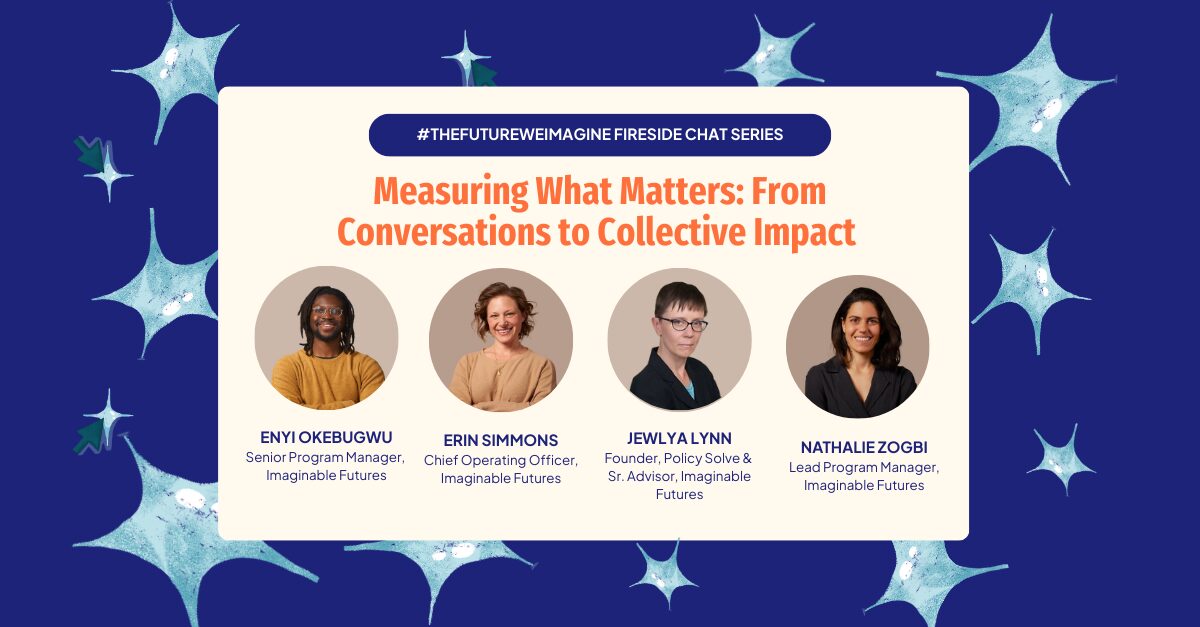
In the second blog, Measuring What Matters: From Conversations to Collective Impact, we explored what we were beginning to see through those conversations, sharing examples and reflections from a webinar that unpacked how the guide worked in practice.
In this third piece, we’re sharing back a few early learnings that emerged from the reports and analyses built from the Systems & Impact Conversation Guide. These insights represent only a small sample of what surfaced across our geographies, but they help illustrate the kinds of patterns and possibilities this work is helping us uncover.
Much of the synthesis that follows was made possible with support from ChatGPT, which we used to organize and distill complex qualitative data into clearer insights. We then honed it further with human assessment and analysis.
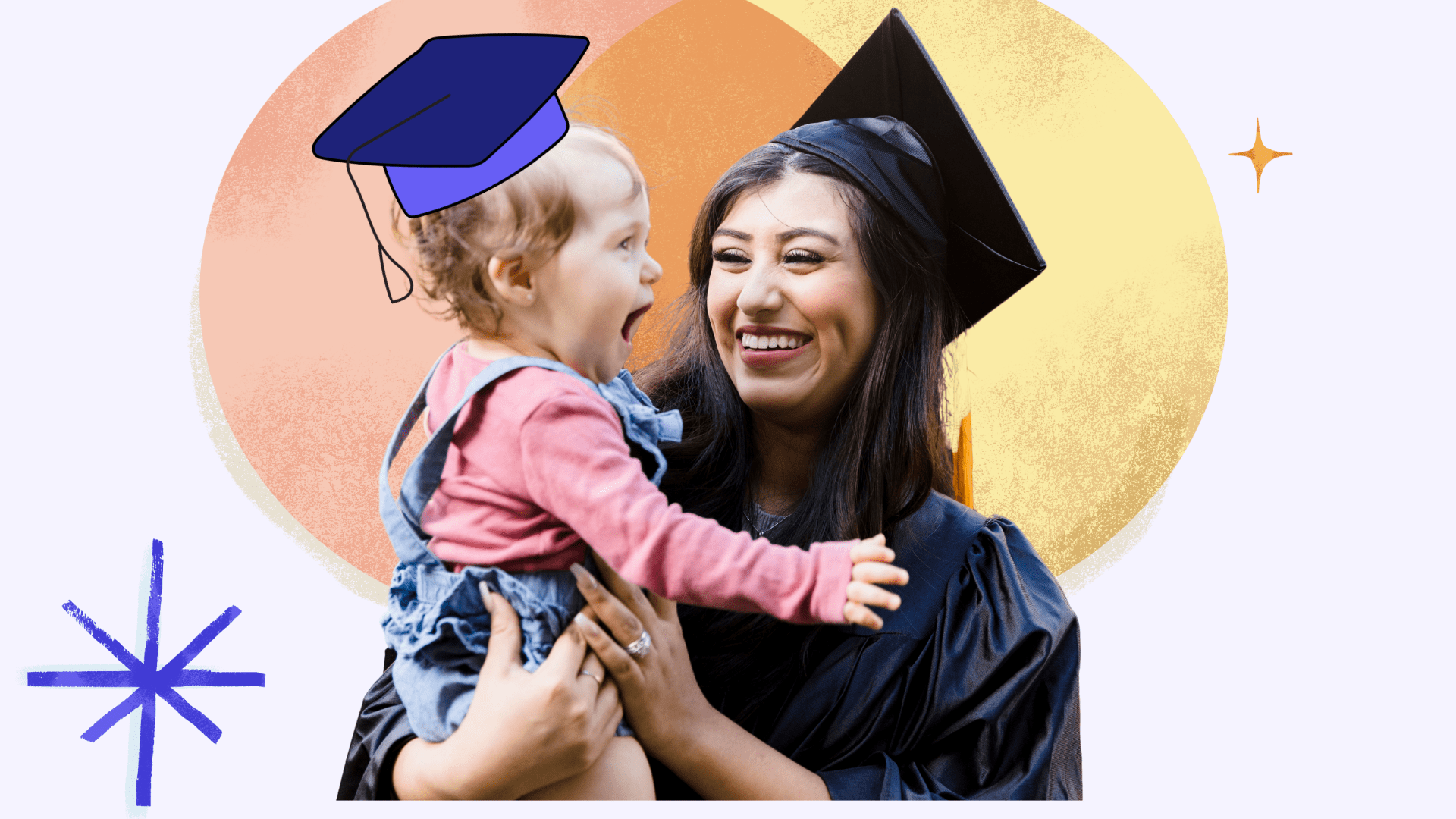
What we heard: In the U.S., the childcare and student parent fields are navigating a period of both strain and renewal. Federal attention has waned since the surge of pandemic-era investment, leaving advocates contending with retrenchment and uncertainty. Yet in that vacuum, energy has shifted to the states—where leaders and coalitions are forging new paths forward.
Across states like New Mexico, Virginia, and Tennessee, bipartisan alliances, employer engagement, and creative revenue models are driving unexpected progress. We heard stories from participants about state-level policy gains, bipartisan openings, and coalition achievements that were described as meaningful “wins” for the child care field demonstrating that advocates and state leaders are still finding ways to advance the field. In higher education, institutions are responding to the visibility of student parents as a vital part of their learning communities—supported by asset-based narratives that recognize their resilience rather than their deficits.
What this teaches us: Together, these stories show how systems adapt when energy decentralizes. When national momentum fades, state and local ecosystems—advocates, business partners, and families—step into the space. As funders, our learning is clear: systems change is neither linear nor predictable. Rather than commit to our previous ideas for how to support change, we need to listen for what is not possible now, see where new opportunities exist amid disruptions, and be prepared to fuel that spark.
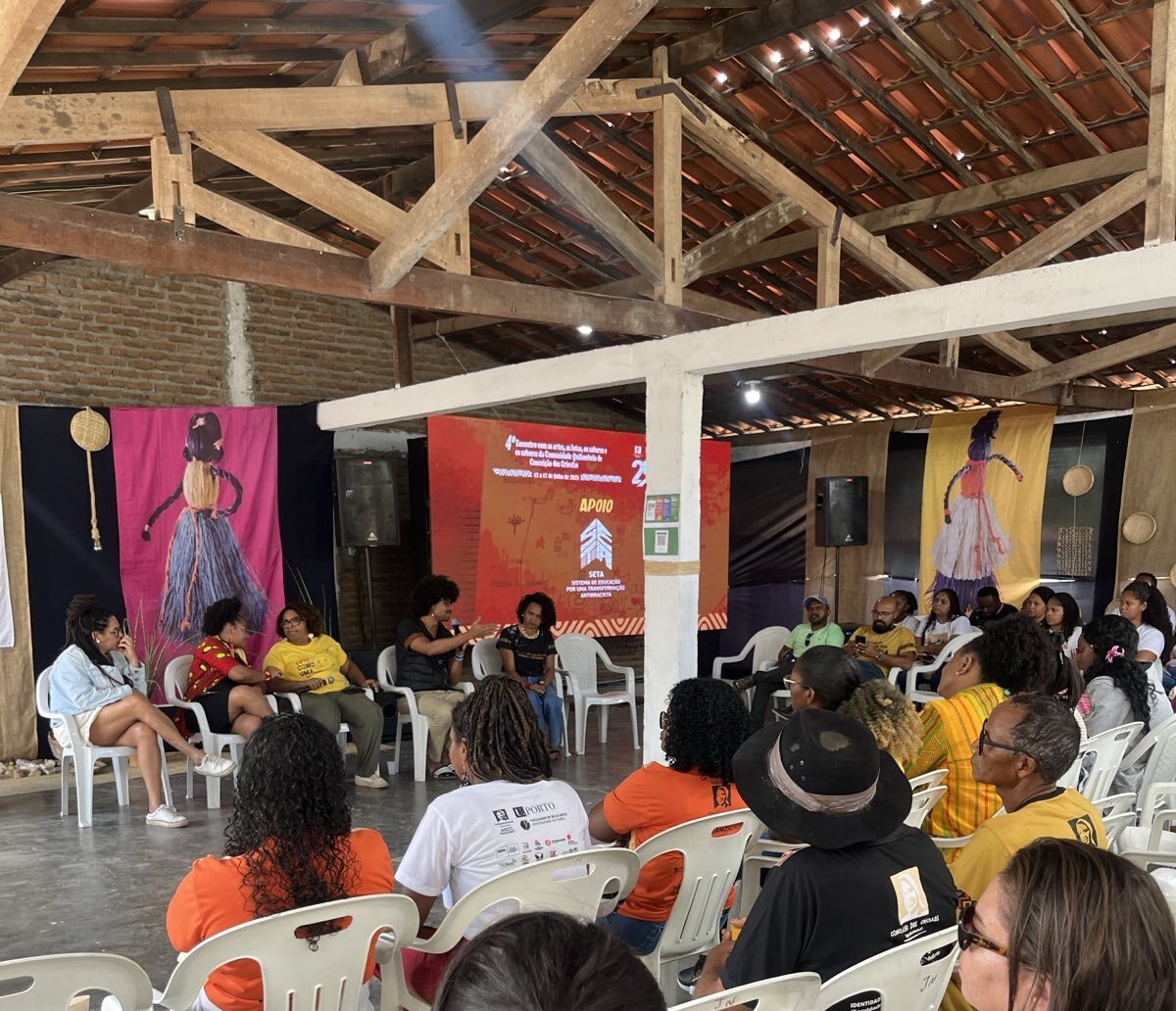
What we heard: In Brazil, partners reflected that while the current political moment has created renewed national support for an equitable education agenda, this momentum hasn’t yet fully translated into implementation at state and municipal levels—or within schools themselves. Structural barriers persist at these layers of the system and not only can’t be ignored but also need to be nurtured. In fact, policy movement is often dependent on these grassroots champions who are typically under-resourced and tasked with responding to the diverse needs of their communities, including the Black, Indigenous and Quilombola communities with whom we work. This leaves well-intentioned policy commitments struggling to reach the classrooms and communities they aim to serve.
Organizations noted that the shift to a more progressive federal government created an openness to education innovation and a commitment to equity education programs but also described how progress in their work depends on strong civil society networks—partnerships that span government agencies, academic institutions, and international allies. Their success depends on these multisectoral webs, with each partner contributing credibility, access, and specialized expertise.
What this teaches us: These reflections underscore that national intent alone isn’t enough; transformation depends on capacity and collaboration at every level—with particular attention to those most proximate to the work and ensuring they are part of a broader network for progress. Our partners shared stories of what happens when collaboration itself becomes the engine of systems change. Across both the Indigenous education and racial equity agendas, organizations in our portfolio are weaving connections that link communities, public institutions, and philanthropy. Groups such as Legisla Brasil, CEERT, Geledés, and the National Forum for Indigenous School Education (FNEEI) are helping amplify equity and representation in education policymaking.
For funders, we see how important it is to support and strengthen these connective networks at all levels—especially those closest to the challenges—so that policy change can take root where it matters most. This web of collaboration bridges the distance between federal aspiration and local implementation. It also creates a more durable, dependable network of advocates who will ensure that equity commitments are carried forward through dialogue, accountability, and community voice.
What we heard: In Kenya, partners helped us see how well-intentioned gender and education policies can stall without attention to the social and cultural realities that shape them—challenging us to reflect on what it takes for equity to move from policy to practice within an entrenched system. Leaders across education and gender equity fields emphasized the need to invest in what they call the “adoption layer”—the often-overlooked structures that enable government ministries and institutions to integrate proven innovations into their systems through teacher training, curriculum alignment, and cost modeling.
Through our systems sensing work, we used the findings from the Kenya report to look more closely at how gender dynamics influence these systemic challenges. While Kenya has a strong policy framework for gender equity, partners noted that implementation often falters. Some of this breakdown reflects broader cultural dynamics, particularly in rural areas, where social norms still shape how girls are valued and the types of work they are encouraged to pursue. Even when girls gain education and skills, misalignments persist—for example, training for livelihoods that don’t connect to local opportunities.
What this teaches us: What emerges from Kenya is a reminder that funders can be more than supporters; we can be participants in the system—helping bridge programs and policy, fostering local research and leadership, and learning alongside partners as they address complex, interdependent barriers. Our systems sensing work has deepened how we think about gender across our portfolio, helping us recognize that sustainable change requires both structural alignment and cultural transformation—advancing gender equity isn’t a program, rather it’s a persistent lens for the programs, policies and practices. Kenya reminds us that reimagining systems also means reimagining how we learn, listen, and act within them.
Durable progress comes from connection, trust, and imagination. Our role is to accompany that work—to resource not just the what of change, but the how and the who and the networks between them that make it endure.
Our learning continues. Together, these stories illustrate how our Systems & Impact Framework helps us learn across contexts: to see where energy is shifting, to strengthen the relationships that sustain it, and to act with humility and partnership as change unfolds. The systems we support—and are part of—are dynamic, interdependent, and ever-changing. That’s why our strategies are emergent and leave room for the same kinds of adaptation, new connections, and imagination that fuel transformation.
And our learning continues with our Systems & Impact framework as a vehicle for measuring and reflecting on our work. As we refine our framework, continuously hone our approaches, and continue through our learning practice, we’re asking new questions:
From the U.S. to Brazil to Kenya, our partners are modeling the answers: showing that durable progress comes from connection, trust, and imagination. Our role is to accompany that work—to resource not just the what of change, but the how, the who, and the networks between them that make it endure.