
Brazil
We partner with initiatives to transform education systems so every learner — especially Black, Indigenous, and Quilombola children and youth — has access to quality education and opportunity. This year, we helped ensure that perspectives from these communities shaped education policy and strengthened community organizations and leaders advancing practices that honor diverse cultures.
Centering Indigenous Voices
to Transform Education
Deep inequities limit educational opportunities for Indigenous, Black, and Quilombola learners in Brazil. Our partnerships with the National Forum for Indigenous School Education (FNEEI) and the Amazonas Forum on Indigenous School Education and Health (FOREEIA) focus on removing these systemic barriers by centering the voices of those closest to the challenges — Indigenous leaders driving change in their own communities.
At the national level, as FNEEI’s first institutional funder, Imaginable Futures has enabled FNEEI to advocate for the landmark National Policy for Indigenous School Education and Ethno-Educational Territories (PNEEI-TEE) while also working with the Ministry of Education on guidelines for implementation. This policy proposes $300 million in investments through 2027 for 249 new Indigenous schools, including Brazil’s first Indigenous university. The policy also establishes a governance structure that ensures Indigenous communities shape decisions about their children’s education. FNEEI played a pivotal role throughout, ensuring Indigenous voices guided both the policy’s conception and its implementation from the start.
In Amazonas — a state three times the size of France and home to 30% of Brazil’s Indigenous population — our support to FOREEIA helped Indigenous leaders shape what could become the country’s first state-level Indigenous education policy. This achievement is particularly significant in a region marked by a large geographic expanse and a history of injustice. By centering Indigenous voices in policy design, the work ensures learners have access to culturally rooted education that strengthens their identities and preserves their ways of life.
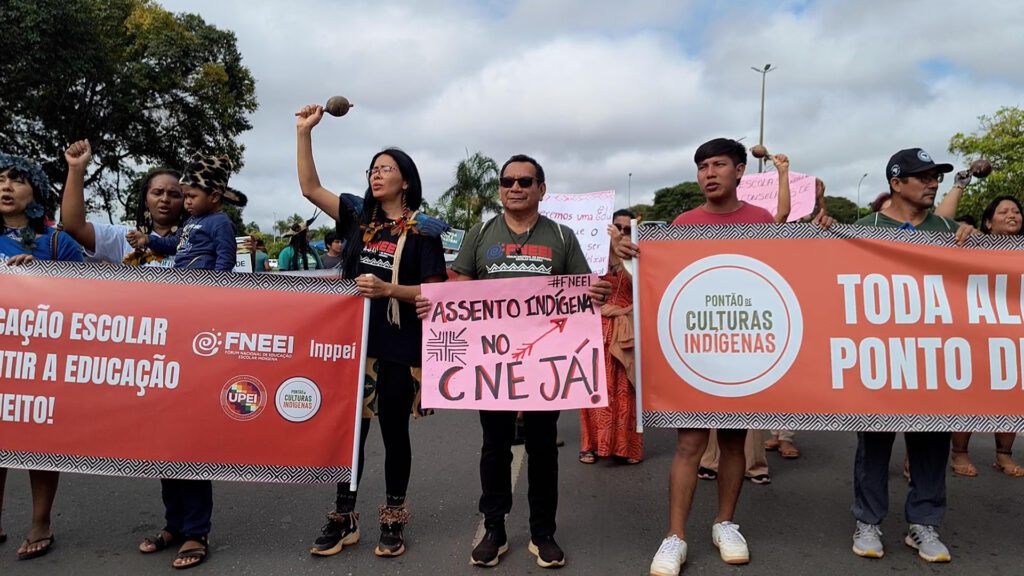
From national policy to state-level implementation, this work demonstrates how elevating the voices of those closest to the challenges leads to transformative change. Together, FNEEI and FOREEIA are reshaping education for thousands of Indigenous students and their families, ensuring they can thrive without leaving their cultures behind — while also strengthening knowledge that offers vital insights for addressing the crises we all face.
Nurturing Collective
Power to Advance Brazil's
National Education Plan
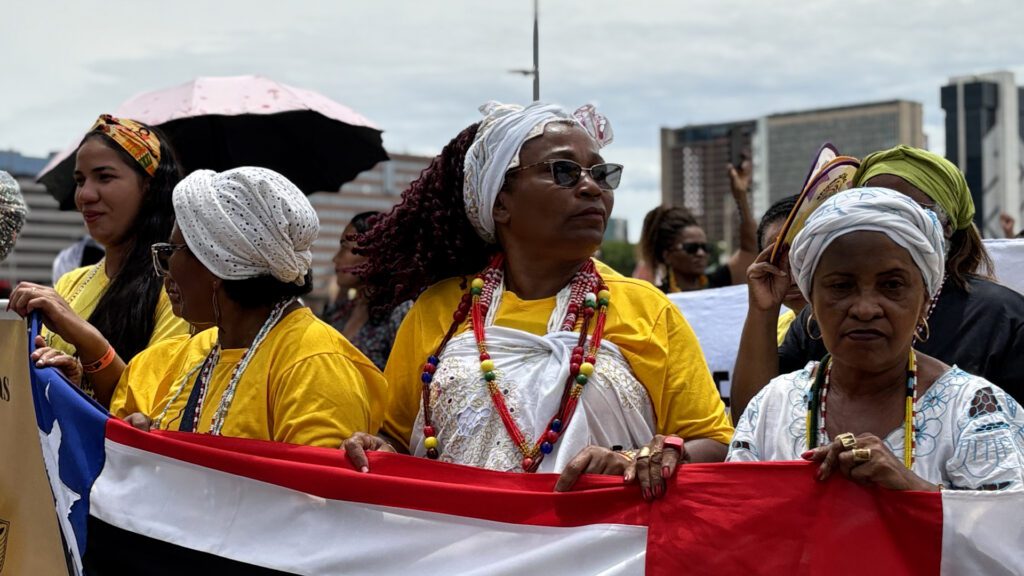
Shaping K-12 education policies on a national scale requires collective power. In Brazil, organizations working on racial equity and education had long advanced individually. However, even their strongest efforts often lacked the combined resources, influence, and political reach needed to shape federal priorities like Brazil’s National Education Plan (PNE), the 10-year framework guiding the country’s educational goals, priorities, and investments.
Where we once supported these groups as individual organizations, in 2025, we used our resources to help strengthen an emerging coalition, uniting CEDENPA, CEERT, CONAQ, Instituto Peregum, Instituto Odara, Legisla Brasil, and Observatório da Branquitude. Mobilizing around the PNE, their collective strength enabled them to achieve far more together than any one group could alone. They submitted 79 amendments focused on inclusive education and racial equity, 58% of which have already been accepted by the rapporteur.
Their collaboration didn’t just amplify their impact; it is helping to shape the direction of Brazil’s education system for the next decade. By ensuring each amendment included named target groups, measurable goals, implementation timelines, and dedicated budgets, they placed equity at the center of the country’s education agenda.
Indigenous, Black, and Quilombola organizations — historically excluded from policymaking spaces — were central to shaping policy, signaling a lasting shift toward more democratic and representative education. As the revised PNE continues through congressional review amid intense political pressure, this coalition’s work demonstrates that when diverse organizations unite their efforts, they can fundamentally reshape how a nation invests in all students.
Building Momentum:
Stories of Progress
Instituto Chapada
Through an approach that equips teachers and school leaders to build skills and mindsets that foster more equitable learning conditions, our partnership with Instituto Chapada addresses a critical gap in Brazil’s historically underfunded Northeast region. The initiative has trained over 16,000 educators, reaching 175,000 students across 850 schools. By working closely with state education departments, Instituto Chapada is demonstrating how civil society organizations can drive systemic change and expand access to quality education in regions far from opportunity.
175K
Students reached through training 16,000+ educators across 850 schools

Latin American Faculty of Social Sciences (FLACSO)
Fragmented advocacy limits the collective power of Indigenous and Quilombola communities across the Amazon on education and climate issues. We supported the Latin American Faculty of Social Sciences (FLACSO) to create spaces for dialogue and joint advocacy, bringing together unlikely allies around climate action. Through convenings where participants exchanged ideas and found common ground, the initiative produced a shared advocacy plan and a collaborative network ready to push for meaningful policy change.
Fundo Podáali
With our investment, Fundo Podáali has strengthened an Indigenous-led model of philanthropy in the Brazilian Amazon, supporting 87 community projects, including 20 focused on Indigenous education. These projects range from combining ancestral wisdom with academic learning to expanding higher education access to preserving and revitalizing Indigenous languages. With few funders supporting Indigenous education, Podáali helps fill a critical gap while advancing approaches that keep culture, language, and land at the center of learning.
87
Community projects supported, including 20 focused on Indigenous education